Walk the system
Every radiator, valve and the pump, not just the one you called about.

Heating · Radiators
One bedroom freezing, the front room roasting, a radiator cold at the bottom, pipes that tick and bang at night. Most of this is fixable without a new boiler. We find what is wrong with the system and put it right.
What’s included
Signs you need this
A radiator cold at the top has air in it, and bleeding it usually fixes the problem. A radiator hot at the top and cold at the bottom has sludge, mostly black magnetite from steel radiators slowly corroding from the inside, and bleeding will not help. That needs a clean, then a magnetic filter and inhibitor to stop it coming back.
Uneven heat is often a balancing problem rather than a broken part. Water takes the easiest route, so the radiators nearest the boiler take most of the flow and the far bedroom gets what is left. Tall Georgian and Victorian townhouses, with long pipe runs over four or five floors, show it most. Setting each lockshield valve carefully, with a thermometer, fixes more cold rooms than people expect.
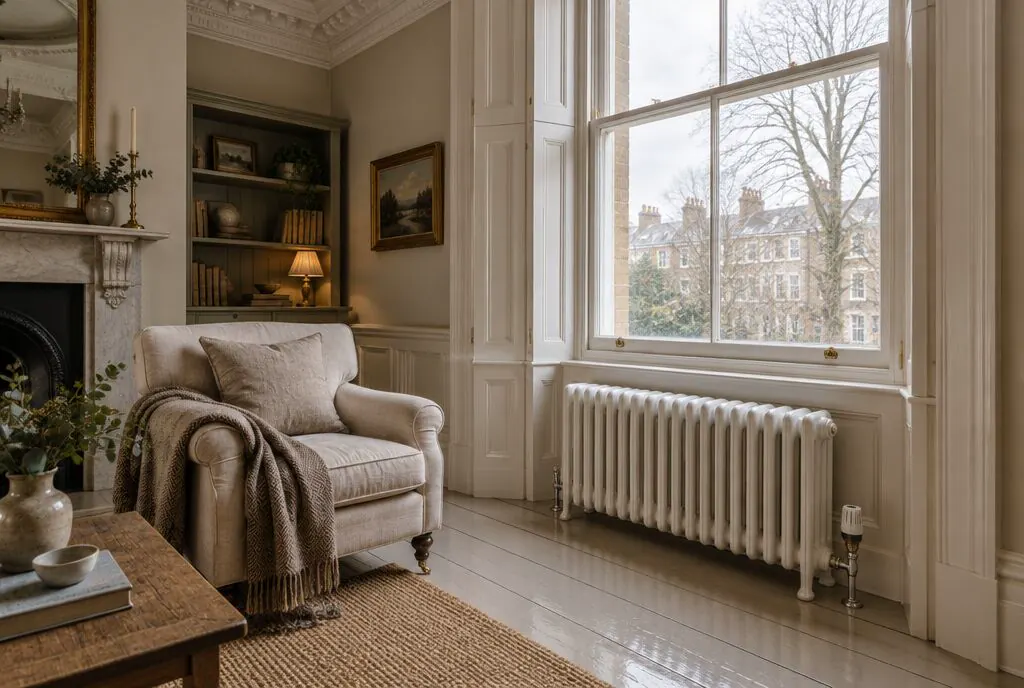
In Victorian and Edwardian terraces we often find radiators sized for draughty rooms that have since been insulated, or one small radiator under the window of a large bay-fronted room. Sizing radiators to each room’s heat loss matters even more if a heat pump is in your future, because heat pumps run at lower temperatures.
How it works
Every radiator, valve and the pump, not just the one you called about.
Air, sludge, a sticking valve, or a system that has never been balanced.
We repair or replace what is needed, then set the lockshield valves so heat reaches every room.
We run the system from cold and check each room before we leave.
Book central heating & radiators
Send the address and a few details. We’ll confirm timing and next steps, and you’ll get a written price before any work starts.
Prefer to talk? 020 7946 0182
Questions
If they are cold at the top, yes. Turn the heating off, let it cool, open the bleed valve with a radiator key until water appears, then check the boiler pressure. On a sealed system you may need to top it up afterwards.
Yes. Cast iron and steel column radiators suit Victorian and Edwardian rooms well. Cast iron is heavy when full, so we check the floor and fixings before fitting.
Most radiators benefit from one. The usual exception is the room with the main thermostat, where a TRV can fight the thermostat; that radiator is normally left without one or set fully open.
Related services
Powerflushing, chemical cleaning, magnetic filters and inhibitor for sludged systems.
Learn moreSmart thermostats, zoning, smart radiator valves and boiler controls, installed and set up.
Learn moreGas Safe diagnosis and repair for combi, system and regular boilers.
Learn moreReady when you are