Survey
We look at the house, the pipework, the water supply and where the boiler and flue can go.

Heating · New boilers
Combi, system or regular: the right boiler depends on how many bathrooms you have, your mains water pressure and where the cylinder and tanks are, not on what is on offer this month. We survey first, explain the options, and fit it properly.
What’s included
Signs you need this
A combi heats water on demand from the mains, so there is no cylinder and no tanks; it suits flats and smaller homes with one bathroom. A system boiler feeds a hot water cylinder and suits homes where two showers run at once. A regular, or heat-only, boiler works with a cold water tank and a feed and expansion tank in the loft, and is often the least disruptive choice in older houses with low mains pressure or pipework never designed for a sealed system.
The mistake we see most is a big combi fitted to a house with three bathrooms, or to a street where the mains pressure is poor. A combi can only deliver as much hot water as the mains supplies, however large its output, so we measure flow and pressure before we recommend one.
Every new gas boiler is notified to building control by the Gas Safe installer, and you receive a Building Regulations compliance certificate. Manufacturer warranties usually require an annual service, so we tell you exactly what yours needs to stay valid.
How it works
We look at the house, the pipework, the water supply and where the boiler and flue can go.
Options, boiler, scope and price in writing. No pressure.
Floors protected, old boiler out, system cleaned, new boiler in.
Benchmark checklist completed, building control notified, controls explained.
Book new boilers & replacement
Send the address and a few details. We’ll confirm timing and next steps, and you’ll get a written price before any work starts.
Prefer to talk? 020 7946 0182
Combis suit flats and smaller homes with one bathroom and good mains pressure. Homes with two or more bathrooms usually do better with a system boiler and a cylinder. Older houses with tanks in the loft sometimes keep a regular boiler to avoid stressing old pipework. We recommend after the survey, not before.
A like-for-like swap is often done in a day. Converting a regular system to a combi, moving the boiler or taking tanks out of the loft takes longer. The quote gives you a realistic timeline.
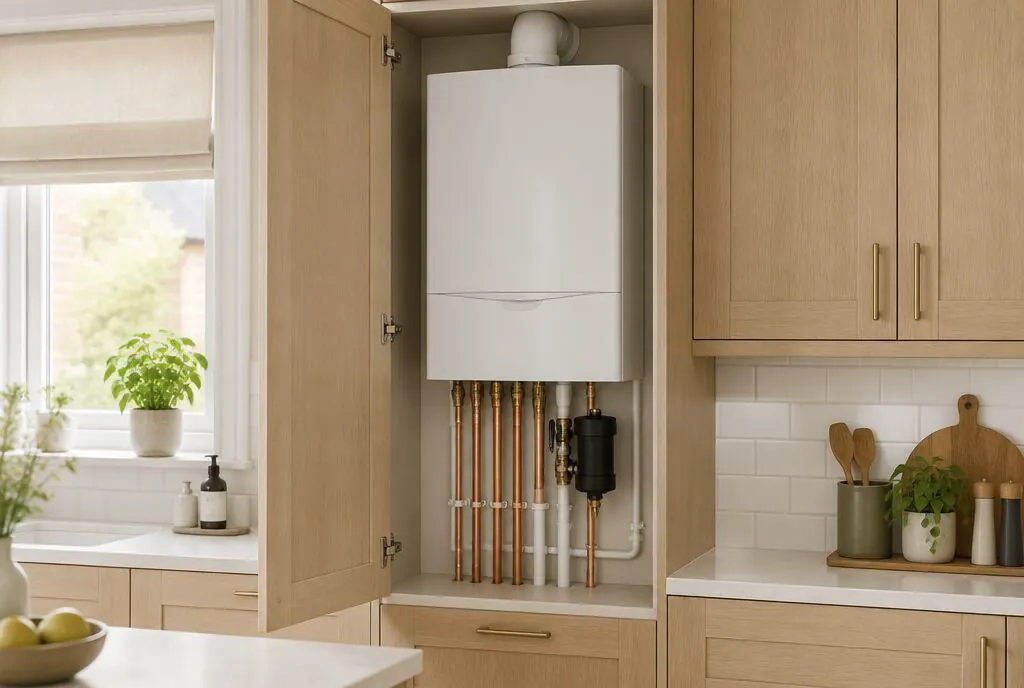
Usually, within the rules on flue position and condensate drainage. Kitchen cupboards, airing cupboards and lofts are all common. In tenement and mansion block flats, the flue route is often what decides it, so we check that at the survey.
It depends on the house. Many homes can run well on a heat pump, especially with the Boiler Upgrade Scheme grant in England and Wales; some need insulation or larger radiators first. We can price both and explain the trade-offs honestly.
Related services
Annual gas boiler servicing with a written record, for homeowners and landlords.
Learn morePowerflushing, chemical cleaning, magnetic filters and inhibitor for sludged systems.
Learn moreAir source heat pump design and installation, with Boiler Upgrade Scheme support.
Learn moreReady when you are